
When someone is diagnosed with kidney disease, one of the first things doctors recommend is controlling the diet—especially vegetables.The main concern is potassium, a mineral that healthy kidneys can easily remove but damaged kidneys cannot.Kidney disease, especially Chronic Kidney Disease (CKD), requires careful dietary management. The kidneys are responsible for filtering waste, excess fluids, and minerals from the blood. When they are not functioning properly, harmful substances can build up in the body.The individuals who is suffering from acute kidney disease or chronic kidney disease,they must have to be depend on the best diet that filtrate the kidney easily.One of the most important steps in managing kidney health is choosing the right vegetables and BEST VEGETABLES FOR KIDNEY PATIENTS. A kidney-friendly diet focuses on low potassium, low sodium, and nutrient-rich foods.
Why Choosing the RIGHT BEST VEGETABLES FOR KIDNEY PATIENTS
Vegetables are generally healthy, but not all are suitable for kidney patients. Some contain high levels of potassium, which can be dangerous when kidneys are unable to remove excess minerals.Vegetables can be divided into three categories based on potassium levels: low, moderate, and high. Low-potassium vegetables are the safest and can be consumed regularly, while moderate ones should be taken in controlled portions. High-potassium vegetables should be avoided or strictly limited.BEST VEGETABLES FOR KIDNEY PATIENTS.
You must know:
- High potassium → Can affect heart rhythm
- High sodium → Increases blood pressure
- Poor food choices → Can worsen kidney damage
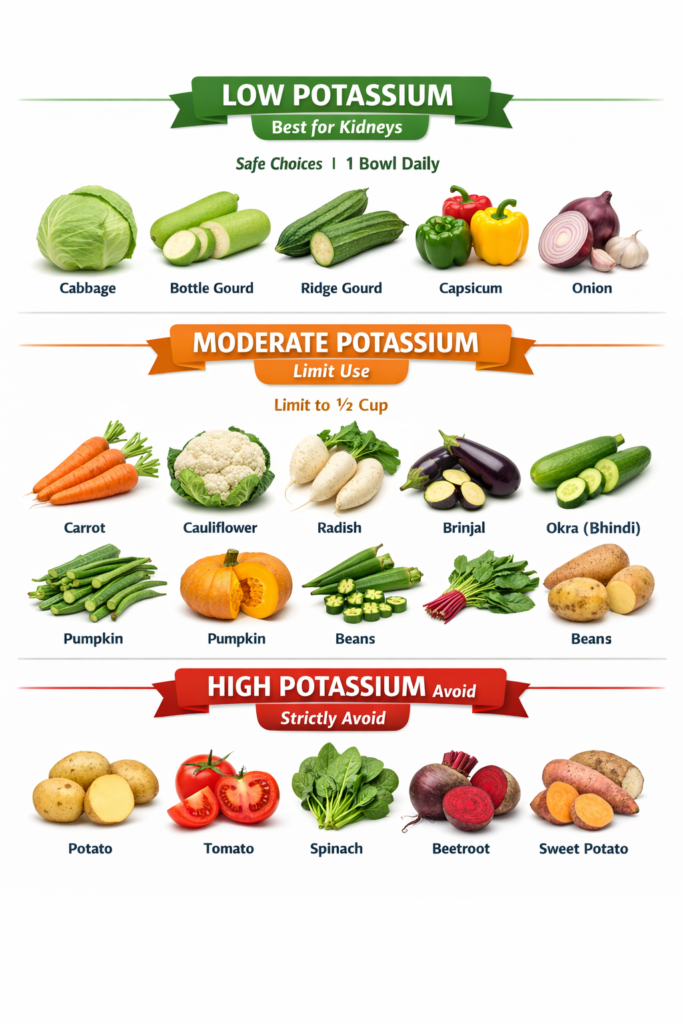
HERE ARE THE BEST VEGETABLES OF LOW POTASSIUM FOR KIDNEY PATIENTS:
1.Cabbage (Patta Gobhi):
The Potassium is Low (~170 mg) ,Rich in: Vitamin C, Vitamin K, fiber.The Filtration effect Reduces toxin load, easy filtration .It is good in Anti-inflammatory that protects kidney cells.
Safe amount: 1–1.5 cup cooked
2.Bottle Gourd (Lauki):
The Potassium is Low (~150 mg) ,Rich in: Water, fiber .The Filtration effect Increases urine flow that helps filtration easily.It is good in Light, cooling and reduces kidney workload
Safe amount: 1 bowl daily
3. Ridge Gourd (Tori):
The potassium is low (~140 mg), rich in water and fiber. The filtration effect supports smooth kidney filtration. It is good because it is easy to digest and light on kidneys.
Safe amount: 1 bowl daily
4. Capsicum (Shimla Mirch):
The potassium is low (~175 mg), rich in vitamin C and antioxidants. The filtration effect reduces oxidative stress on kidneys. It is good for protecting kidney tissues.
Safe amount: ½–1 cup daily
5. Cucumber (Kheera):
The potassium is low (~150 mg), rich in water content. The filtration effect helps flush toxins through urine. It is good for hydration and kidney cleansing.
Safe amount: 1 medium daily
6. Brinjal (Baingan):
The potassium is moderate (~230 mg), rich in fiber. The filtration effect is neutral when taken in limit. It is good as a low calorie vegetable.
Safe amount: ½ cup daily
7. Okra (Bhindi):
The potassium is moderate (~300 mg), rich in fiber. The filtration effect may increase load if taken in excess. It is good for gut health.
Safe amount: ½ cup daily
8. Pumpkin (Kaddu):
The potassium is moderate (~340 mg), rich in beta-carotene. The filtration effect is manageable in small amounts. It is good for easy digestion.
Safe amount: ½ cup daily
9. Beans (French Beans):
The potassium is moderate (~210 mg), rich in fiber. The filtration effect gives mild load on kidneys. It is good for nutrition but should be limited.
Safe amount: ½ cup daily
9. Cauliflower (Phool Gobhi):
The potassium is moderate (~300 mg), rich in fiber and vitamin C. The filtration effect is safe when taken in limited amount. It is good as a substitute for high potassium vegetables.
Safe amount: ½–1 cup daily
10. Garlic (Lehsun):
The potassium is low, rich in anti-inflammatory compounds. The filtration effect improves blood flow to kidneys. It is good for controlling blood pressure and protecting kidneys.
Safe amount: 2–3 cloves daily
HIGH POTTASIUM VEGETABLES STRICLTY AVOID:
1. Potato (Aloo):
The potassium is high (~420 mg), rich in starch. The filtration effect puts heavy load on kidneys. It is not good as it raises potassium quickly.
Safe amount: Avoid or very small portion after boiling
2. Tomato (Tamatar):
The potassium is high (~420 mg), rich in lycopene. The filtration effect increases potassium load. It is not good if taken daily in excess.
Safe amount: Very limited
3. Spinach (Palak)/METHI/BHAJI
The potassium is very high (~550 mg), rich in iron. The filtration effect is difficult for kidneys. It is not good due to potassium overload risk.
Safe amount: Avoid
4. Beetroot (Chukandar):
The potassium is high (~325–400 mg), rich in iron. The filtration effect increases kidney load. It is not suitable for kidney patients.
Safe amount: Avoid
5. Sweet Potato (Shakarkandi):
The potassium is high (~475 mg), rich in carbohydrates. The filtration effect puts high burden on kidneys. It is not good for kidney patients.
Safe amount: Avoid
6. Arbi (Colocasia):
The potassium is high (~450 mg), rich in starch. The filtration effect creates heavy kidney load. It is not kidney-friendly.
Safe amount: Avoid
One of the most effective ways to make vegetables safer for kidney patients is by changing the cooking method. Boiling vegetables and discarding the water can reduce a significant amount of potassium. This simple step can make even moderate vegetables safer to consume. At the same time, it is important to avoid adding too much salt, as sodium can increase blood pressure and further damage the kidneys.
In real life, managing a kidney-friendly diet is not about completely avoiding vegetables but about making smart choices. Filling your plate with low-potassium vegetables, controlling portions of moderate ones, and limiting high-potassium foods can make a big difference in overall health.
To keep things simple, kidney patients should remember this rule: eat freely from low-potassium vegetables, be careful with moderate ones, and avoid high-potassium vegetables as much as possible. Along with proper medical guidance, these small dietary changes can help protect kidney function and improve quality of life.
YOU MAY ALSO READ THE ARTICLE: