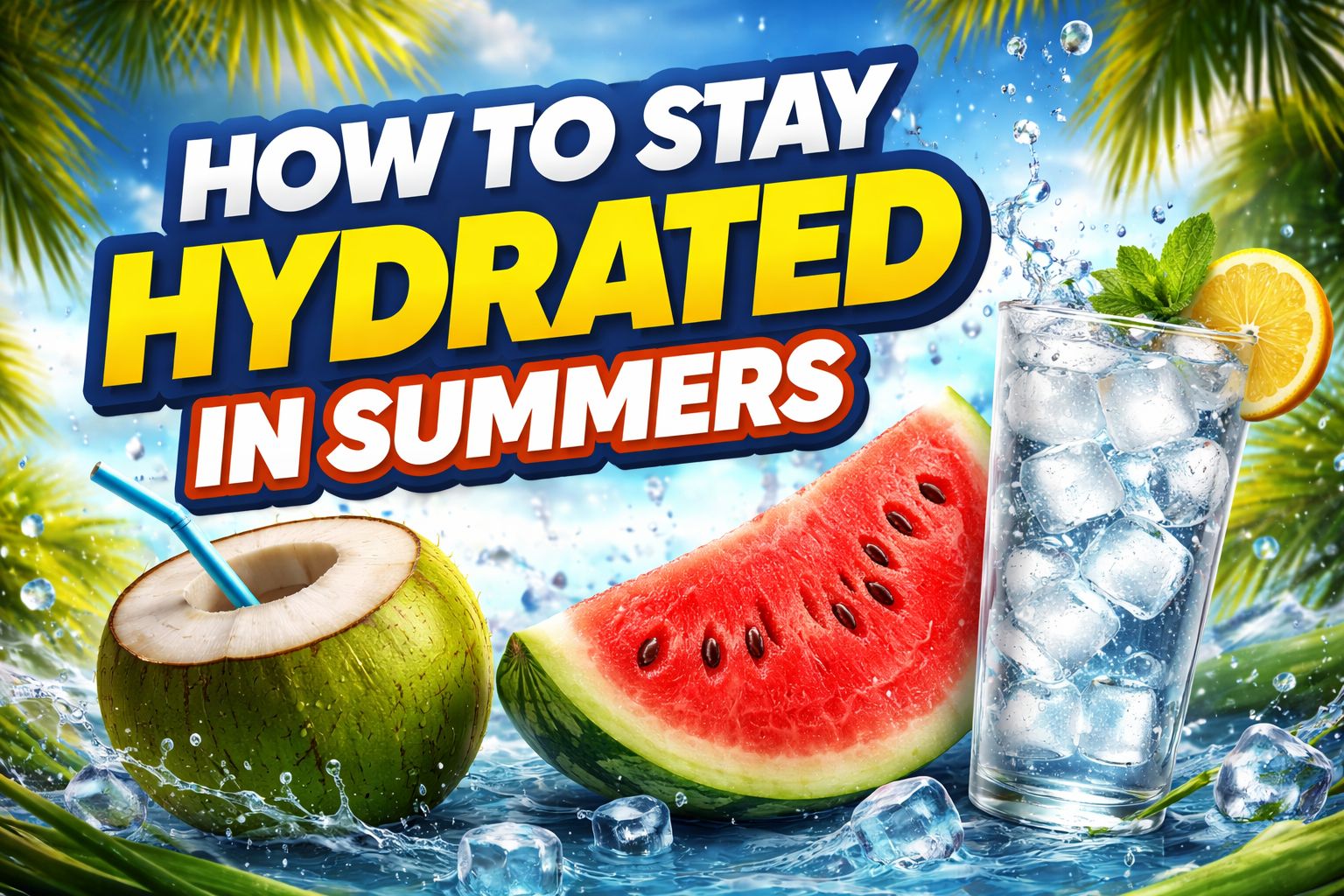
HOW TO STAY HYDRATED IN SUMMERS ,AN BIG QUESTION..With the rise in temperature during summer, the risk of dehydration increases significantly. The human body relies on water for various vital functions, including temperature regulation and metabolic processes. Therefore, maintaining proper hydration becomes crucial to prevent fatigue, heat-related illnesses, and other health complications.Have you ever felt tired, dizzy, or low on energy during hot summer days? One of the main reasons behind this is dehydration. In summer, our body loses more fluids through sweating, and if this loss is not replaced, it can affect our health. That’s why staying hydrated is one of the most important habits during the summer season.There is an important tips that you can follow:
1. Drink Enough Water
Water is essential for every function in the body, such as maintaining body temperature, digestion, and blood circulation.In summer, your body loses more water through sweating, which increases the risk of dehydration. That is why you need to drink more water than usual.
Do not wait until you feel thirsty, because thirst is actually a late sign of dehydration.
👉 It is better to drink water regularly throughout the day.
2. Eat Water-Rich Foods
Some foods contain a high amount of water and help keep your body hydrated.
For example, watermelon, cucumber, oranges, and strawberries contain more than 80–90% water.
These foods not only provide hydration but also supply essential vitamins and minerals that support body functions.
👉 Including these in your daily diet helps maintain fluid balance.
3. Avoid Dehydrating Drinks
Certain drinks can increase water loss from the body.
Beverages like coffee, tea (in excess), soft drinks, and energy drinks contain caffeine or high sugar levels.
Caffeine acts as a diuretic, which means it increases urine production and leads to more fluid loss.
👉 Limiting these drinks helps prevent dehydration.
4. Carry a Water Bottle
Keeping a water bottle with you at all times helps you remember to drink water regularly.
When water is easily available, you are more likely to take small sips throughout the day.
👉 This helps maintain continuous hydration instead of sudden intake.
5. Drink Before You Feel Thirsty
Thirst indicates that your body has already started losing fluids.
Waiting until you feel thirsty can lead to dehydration.
Instead, develop a habit of drinking small amounts of water frequently.
👉 Regular hydration is more effective than drinking large amounts at once.
6. Add Electrolytes if Needed
When you sweat a lot, your body loses not only water but also important electrolytes like sodium and potassium.
These electrolytes are necessary for proper muscle function, nerve signals, and maintaining fluid balance.
Drinks like ORS (Oral Rehydration Solution), coconut water, and lemon water with a pinch of salt help restore these electrolytes.
👉 This is especially important during heavy sweating or physical activity.
7. Wear Light Clothing
Clothing plays an important role in controlling body temperature.
Light-colored, loose, and breathable clothes allow air to circulate and reduce heat absorption.
This helps your body stay cool and reduces excessive sweating.
👉 Less sweating means less water loss.
8. Avoid Direct Sun Exposure
Direct exposure to sunlight increases body temperature quickly.
Spending too much time in the sun can lead to dehydration, heat exhaustion, or even heatstroke.
It is best to avoid going out during peak heat hours (12 PM – 4 PM).
👉 If you must go outside, use a cap, sunglasses, or an umbrella.
9. Check Urine Color
Urine color is a simple and effective way to check your hydration level.
- Light yellow or clear urine indicates proper hydration
- Dark yellow urine indicates dehydration
👉 This is an easy self-check method you can use daily.
10. Special Care for Children and Elderly
Children and older adults are more vulnerable to dehydration.
They may not feel thirsty as strongly as others, so they may not drink enough water on their own.
👉 It is important to remind and encourage them to drink fluids regularly.
In Conclusion, staying hydrated during summer is essential for maintaining overall health and preventing heat-related illnesses. As the body loses more fluids through sweating, it becomes important to consistently replenish water and electrolytes. Simple habits such as drinking water regularly, consuming water-rich foods, and avoiding excessive heat exposure can make a significant difference. By adopting these practices, one can stay active, healthy, and protected during the summer season.
Nice 👍