Global Prevalence Trends
LET’S TALK ABOUT THAT, WHY YOUNGSTERS AFFECTING NON-ALCOHOLIC FATTY DISEASE?.Recent studies show that global prevalence of NAFLD has increased from ~25% (1990–2006) to ~38% (2016–2019).Current estimates suggest that around 30–38% of adults worldwide are affected.NAFLD is now considered the fastest-growing cause of chronic liver disease globally.NON-ALCOHOLIC FATTY DISEASE,Conclusion: NAFLD is becoming a global epidemic.NAFLD is no longer an “adult disease” — it is rapidly increasing in youth.WHY YOUNGSTERS AFFECTING NON-ALCOHOLIC FATTY DISEASE?
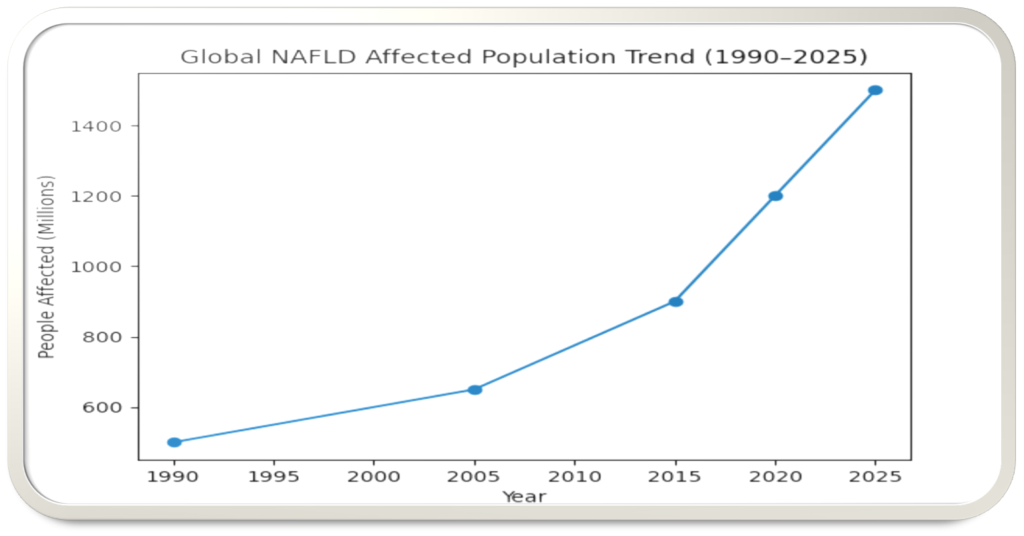
“NON-ALCOHOLIC FATTY DISEASE,Not only percentage, but the absolute number of people affected by NAFLD has increased significantly, reaching over 1.5 billion globally by 2025.”WHY YOUNGSTERS AFFECTING NON-ALCOHOLIC FATTY DISEASE?
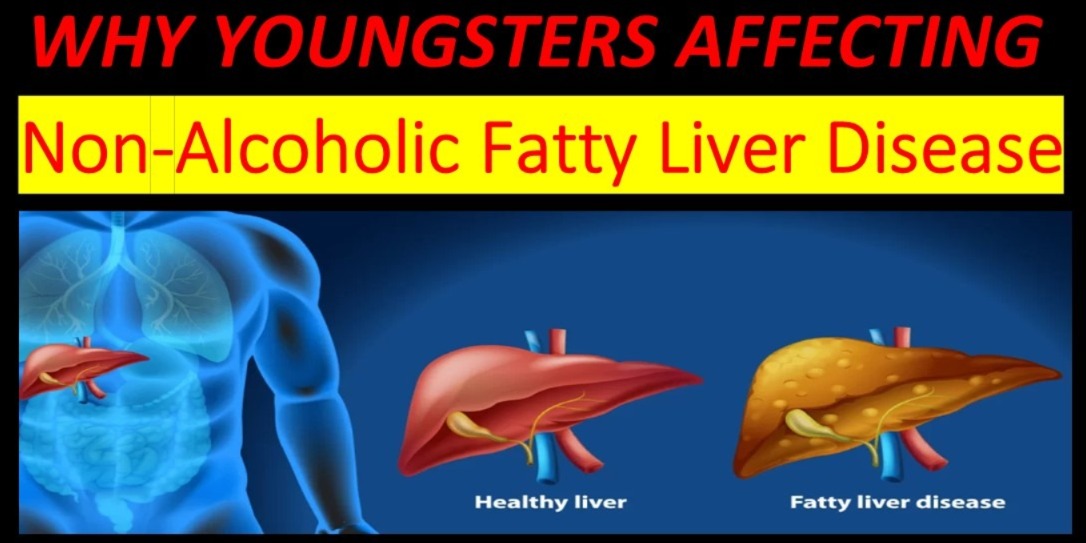
•Non-Alcoholic Fatty Liver Disease (NAFLD) is a rapidly increasing liver disorder, especially among young individuals.It is closely associated with modern lifestyle factors such as unhealthy diet, physical inactivity, and obesity.In recent years, NAFLD has become one of the most common causes of chronic liver disease worldwide, even in adolescents and young adults.WHY YOUNGSTERS AFFECTING NON-ALCOHOLIC FATTY DISEASE?
NAFLD is defined as:
“The accumulation of excess fat (more than 5–10%) in liver cells in individuals who consume little or no alcohol.”It is diagnosed when hepatic steatosis is present without significant alcohol intake or other liver diseases.
Types of Non-Alcoholic Fatty Liver disease:
NON-ALCOHOLIC FATTY DISEASE is broadly divided into two main types:
1. Simple Fatty Liver (Steatosis)
•Fat accumulates in liver cells
•No significant inflammation or damage
•Usually reversible
2. Non-Alcoholic Steatohepatitis
•Fat accumulation + inflammation
•Liver cell damage occurs
•Can progress to fibrosis and cirrhosis
Grading of Fatty Liver:
•Fatty liver is classified into 3 grades based on severity:
Grade 1 (Mild)
•Small amount of fat accumulation
•Often asymptomatic
•Easily reversible
Grade 2 (Moderate)
•Increased fat deposition
•Mild liver inflammation may begin
Grade 3 (Severe)
•Large fat accumulation
•High risk of liver damage, fibrosis, and cirrhosis
PATHOPHYSIOLOGY / MECHANISM:
👉 Step 1: Too Much Sugar & Fat Intake
•When a person eats a lot of junk food, oily food, and sugary drinks, the body gets more energy than it needs.
➡️ The extra sugar is converted into fat.
👉 Step 2: Insulin Stops Working Properly
•The body develops insulin resistance (insulin doesn’t work well).
➡️ Because of this:
•Sugar stays high in blood
•More fat is produced in the body
👉 Step 3: Fat Starts Depositing in Liver
•The extra fat travels to the liver and gets stored there.
➡️ Liver cells (hepatocytes) start filling with fat
➡️ This condition is called fatty liver (steatosis)
👉 Step 4: Liver Gets Stressed (Oxidative Stress)
•Too much fat causes stress inside liver cells.
➡️ Harmful substances (free radicals) damage liver cells
👉 Step 5: Inflammation Begins
•The body tries to repair damage → inflammation starts
➡️ This stage is called Non-Alcoholic Steatohepatitis
👉 Step 6: Long-Term Damage (Fibrosis → Cirrhosis)
If not treated:
•Scar tissue forms (fibrosis)
•Liver becomes hard and damaged (cirrhosis)
Unhealthy diet → Insulin resistance → Fat accumulation → Liver damage → Inflammation → Fibrosis
“When the body cannot handle excess sugar and fat, it stores it in the liver, leading to fatty liver and damage over time.”
Risk Factors of NON-ALCOHOLIC FATTY DISEASE
•Obesity (especially abdominal fat)
•Sedentary lifestyle
•High sugar & junk food intake
•Type 2 Diabetes
•Dyslipidemia (high cholesterol)
•Genetic predisposition
•Poor sleep patterns
SIGNS AND SYMPTOMS:
NON-ALCOHOLIC FATTY DISEASE is often asymptomatic, but may include:
•Fatigue
•Mild pain in right upper abdomen
•Weakness
•Enlarged liver (hepatomegaly)
COMPLICATIONS:
If untreated, NAFLD may lead to:
•Fibrosis
•Cirrhosis
•Liver failure
•Increased risk of cardiovascular diseases
PREVENTION & MANAGEMENT OF NON-ALCOHOLIC FATTY LIVER DISEASE:
1. Lifestyle Modification (Most Important )
✔️ Healthy Diet
•Follow a balanced diet rich in fruits, vegetables, and whole grains
•Reduce sugar, refined carbohydrates, and processed foods
•Avoid junk food, fried food, and sugary drinks
•Include healthy fats (nuts, seeds, olive oil)
Diet control is the first and most effective step in preventing NAFLD.
✔️ Regular Physical Activity
•At least 150 minutes/week of moderate exercise
•Activities: walking, jogging, cycling, yoga
➡️ Exercise helps:
•Reduce liver fat
•Improve insulin sensitivity
✔️ Weight Management
•Aim for 5–10% weight loss
•Even small weight loss significantly improves liver condition
➡️ Especially important for overweight/obese individuals
✔️ Proper Sleep
•Maintain 7–8 hours of sleep daily
•Poor sleep worsens metabolism and fat accumulation.
2. MEDICAL MANAGEMENT OF NON-ALCOHOLIC FATTY DISEASE
•Proper management of:
•Type 2 Diabetes
•High cholesterol (dyslipidemia)
•High blood pressure
➡️ These conditions worsen NAFLD progression
3. Dietary Recommendations:
✔️ Foods to Eat
•Green leafy vegetables
•Fruits (apple, papaya, berries)
•Whole grains (oats, brown rice)
•Lean protein (eggs, fish, pulses)
❌ Foods to Avoid
•Sugary drinks (soft drinks, packaged juice)
•Fast food (burger, pizza, chips)
•Excess salt and fried food
•Bakery products (cakes, pastries)
4. BEHAVIORAL CHANGES:
•Reduce screen time
•Avoid overeating & late-night eating
•Maintain a daily routine
•Manage stress (meditation, yoga)
Conclusion of NON-ALCOHOLIC FATTY DISEASE
•NAFLD is a lifestyle-related disease that is increasingly affecting young individuals.
Early detection and lifestyle modifications play a crucial role in preventing disease progression.
“Healthy lifestyle is the key to reversing fatty liver at an early stage.”